Thursday, August 13, 2009

Les Paul dies at 94

Guitar master Les Paul, who created the famous Gibson Les Paul electric guitar {my dream guitar}, died today of severe pneumonia. He was 94.

Les Paul played guitar in clubs even in his 90s.

Paul likely will be best remembered for the Gibson Les Paul, a variation on the solid-body guitar he built in the early 1940s -- "The Log" -- and offered to the guitar company.
"For 10 years, I was a laugh," he told CNN in an interview. "[But I] kept pounding at them and pounding at them saying hey, here's where it's at. Here's where tomorrow, this is it. You can drown out anybody with it. And you can make all these different sounds that you can't do with a regular guitar."


Gibson, spurred by rival Fender, finally took Paul up on his offer and introduced the model in 1952. It has since become the go-to guitar for such performers as Jimmy Page.

"The world has lost a truly innovative and exceptional human being today. I cannot imagine life without Les Paul," said Henry Juszkiewicz, chairman and CEO of Gibson Guitar, in a statement. "He would walk into a room and put a smile on anyone's face. His musical charm was extraordinary and his techniques unmatched anywhere in the world."

Paul is enshrined in the Rock and Roll Hall of Fame, the Grammy Hall of Fame, the Inventors Hall of Fame and the Songwriters Hall of Fame. He is survived by three sons, a daughter, five grandchildren and five great-grandchildren. Until recently he had a standing gig at New York's Iridium Jazz Club, where he would play with a who's who of famed musicians.

He admired the places guitarists and engineers took his inventions, but he said there was nothing to replace good, old-fashioned elbow grease and soul.

"I learned a long time ago that one note can go a long way if it's the right one," he said in 2002, "and it will probably whip the guy with 20 notes."

Rest in peace, Les.

Wednesday, August 12, 2009

Economy Stabilizing

Apparently the economy is starting to stabilize, and the recession may starting to be finally over.

The "Bush Recession" may finally be coming to an end, reports both CNN and FoxNews. Economists are putting the start of this recession at December 2007 (as much as the Obama-deranged would like to blame our current President of eight months).

NEW YORK (CNNMoney.com) -- Stocks sustained gains Wednesday after the Federal Reserve held interest rates near historic lows and signaled the economy has finally started to stabilize.

FOX NEWS: Economists date the start of the recession to December 2007 -- defining much of Ben Bernanke's term as Federal Reserve chairman -- and a majority in a Wall Street Journal survey agree that the recession is coming to an end.

As much as I disliked the bailouts and stimulus package, I have to say, they may have worked.

FOX NEWS: However, in the current recession, companies have been using the productivity gains to bolster their bottom lines in the face of declining sales. Many companies have been reporting second-quarter earnings results that have beaten expectations despite falling sales, due largely to their aggressive cost cutting.

So we are going to start seeing the economy move up for once. Thankfully.

But CNN warns:

"The Fed reinforced what investors already knew, that the economy has gotten a little better," said James Barnes, fixed income portfolio manager at National Penn Investors Trust.
"But until we see more news that either reinforces the belief that the recovery is here or says we've gone too fast too soon, you're not going to see a bigger reaction."


Hopefully this will mean that we'll be fully recovered within a year. If that is the case, I don't know if 2010 will look too good for Republicans.

If it takes longer, 2010 won't look good for Democrats.

We'll see.

Tuesday, August 11, 2009

My take on HealthCare

I haven't posted much at all on this subject, because frankly, I haven't read the bill and really don't know too much about what it says.

I know that it doesn't talk about "death panels", euthanasia, abortions, etc. But other than that, it is a 1,000 page bill. And my representatives won't even read it.

So far, from what [little] I do know:
  • People are angry on both sides.
  • The right says the left are being thugs at the town halls
  • The left says the right are being thugs at the town halls
  • I've seen pictures/videos of both of them doing it
  • I doubt there are many "paid" disrupters
  • Lies are being thrown about by both sides as to what exactly this bill is or isn't

I have some opinions:

  • The Representatives/Senators we've elected need to read the thing, in its entirety, before voting either way
  • People need to calm down at the town hall meetings, and stop shouting over each other
  • While I feel for the uninsured, I don't think now is the time to fix this
  • Thus, I don't like it that Obama is rushing this through

Therefore, before giving healthcare to everyone, I think we need to do something more important: fix the healthcare system for those of us who already have healthcare. If you watch the movie Sicko by Michael Moore, regardless of how you feel about him, this brilliant documentary really shows how the insurance companies screw us over. There are "death" panels on private insurance companies' payroll; there are people who decide if they should pay for healthcare based on monetary/accounting figures. My sister almost died because the insurance company wouldn't approve her MRI to see what was wrong with her. When my parents finally just borrowed the money to do it anyway, they found a life threatening disease that would have killed my sister had they not caught it in time.

And that is wrong. My parents pay for healthcare.

This is what needs to be fixed. Otherwise, we are going to replace these corrupt beaurecrats with government ones, and everyone will deal with these guys. Fix the system we have now, don't just shuffle who pays for it and give it to everyone.

Thursday, August 6, 2009

America needs Immigrants to remain great

I've been reading a lot of editorials and articles lately on historical patterns. Right now, we are living in a similar, albeit smaller scale, time as around the Great Depression. Mark Twain said "History doesn't repeat itself, but it does rhyme." And we are rhyming with a few other periods in time centered on a recession or depression.

From Reset: How This Crisis Can Restore Our Values and Renew America, by Kurt Andersen, talking about another "rhyming" moment:

We've just finished living through a long Gilded Age, in which rich Americans got richer, and more and more people began consuming conspicuously. The original Gilded Age began a century earlier, in the 1870s, during a laissez-faire boom that lasted — déjà vu! — from the end of one Wall Street and banking meltdown (the Panic of 1873) to the beginning of another (the Panic of 1893).

The idea of historical cycles can be reassuring: what comes down must go up. However, great nations can shrivel and empires do come to an end. And America in 2009 also looks as if it could rhyme, uncomfortably, with Great Britain circa 1909. A hundred years ago, the British were coming off a proud century as the most important nation on earth. But during the 30 years between the beginning of World War I and the end of World War II, the United States emerged as the unequivocal world leader, and Britain became an admirable also-ran.


I found this quite interesting. In a few other exerpts, Andersen talks about other historical rhymes, and what the consequences were. After the Great Depression, the US emerged as the world leader. He talks about what we can do to avoid losing that spot to China, and becoming the Great Britain of the 21st century.

Andersen predicts that, if we can get through this the right way and emerge unscathed as the Great Nation we have been, we will see another great economic, technological, and societal boom as we did after each previous recession. We had similar crashes in the '60s and '70s, where "we found ourselves in a slough of despond, with an oil crisis, a terrible recession, declining productivity, a kind of Weimarish embrace of cultural decadence" we then got from that era Federal Express, Microsoft, Apple, and others. Yes, we will lose certain industries, but we will gain others.

What else did other crashes have before we went to Superpower status? We had a wave of immigrants.

The waves of exotic foreigners who poured in during the 1800s and early 1900s were unsettling to Americans at the time — culturally, economically, and politically. But our forebears got over it, fortunately, since the newcomers were instrumental in forging the American Century.

No other nation on earth assimilates immigrants as successfully as the United States. There are those who argue that we can no longer afford to open our doors so wide, but in fact precisely the opposite is true. Beyond giving sentimental, self-flattering lip service to our history as "a nation of immigrants," the sooner we can agree on a coherent and correctly self-serving national immigration policy — that is, to encourage and enable as many as possible of the world's smartest and most ambitious and open-minded people to become Americans — the better our chances of forestalling national decline...

Just as we are now dependent on cheap credit and cheap manufactured goods from China, we really can't afford to say no to cheap laborers from Mexico and Central America, and we need to admit that truth and make the system for absorbing them rational. At the upper end of the scale, it's crazily self-defeating for us to set arbitrary and entirely politicized limits on the visas we grant to skilled foreign workers, such as software engineers and nurses. Wouldn't it make more sense to establish a politically independent federal apparatus, like the Federal Reserve System, that would adjust immigration quotas according to the actual and projected ebbs and flows of our economy?

Basically, we need immigrants. Sometimes we need more, sometimes we need less. We need some way of regulating that, and a better system for getting them legally. We need tax-paying immigrants who will not only provide cheap labor, such as what provided that backbone of the industrial revolution, but also the other end of the spectrum; we need immigrants who will bring fresh ideas and ways of thinking to our complacent system. People like Einstein and other immigrants who brought changes to the United States. Immigrants who will give birth to the future Reagans, Clintons, Obamas, Martin Luther Kings, Rosa Parks, Lincolns, MacArthurs, etc.

We need to get over our xenophobic aversion to immigration in order to survive.

Read exerpts from Reset here:
http://www.time.com/time/nation/article/0,8599,1914738,00.html?loomia_si=t0:a16:g2:r3:c0.0741689:b26986058&xid=Loomia

Tuesday, August 4, 2009

Birthers: Enough. You are all idiots.

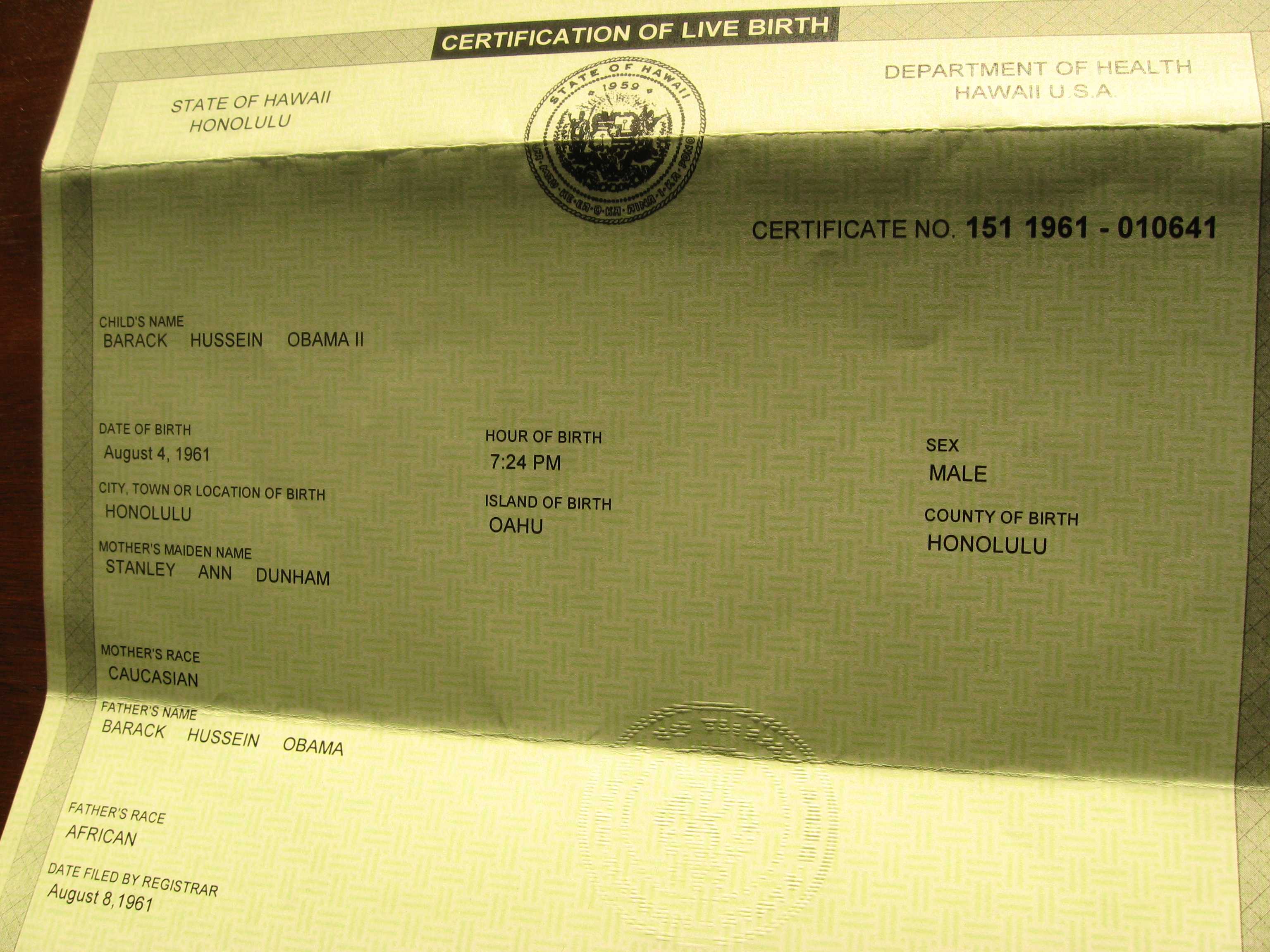
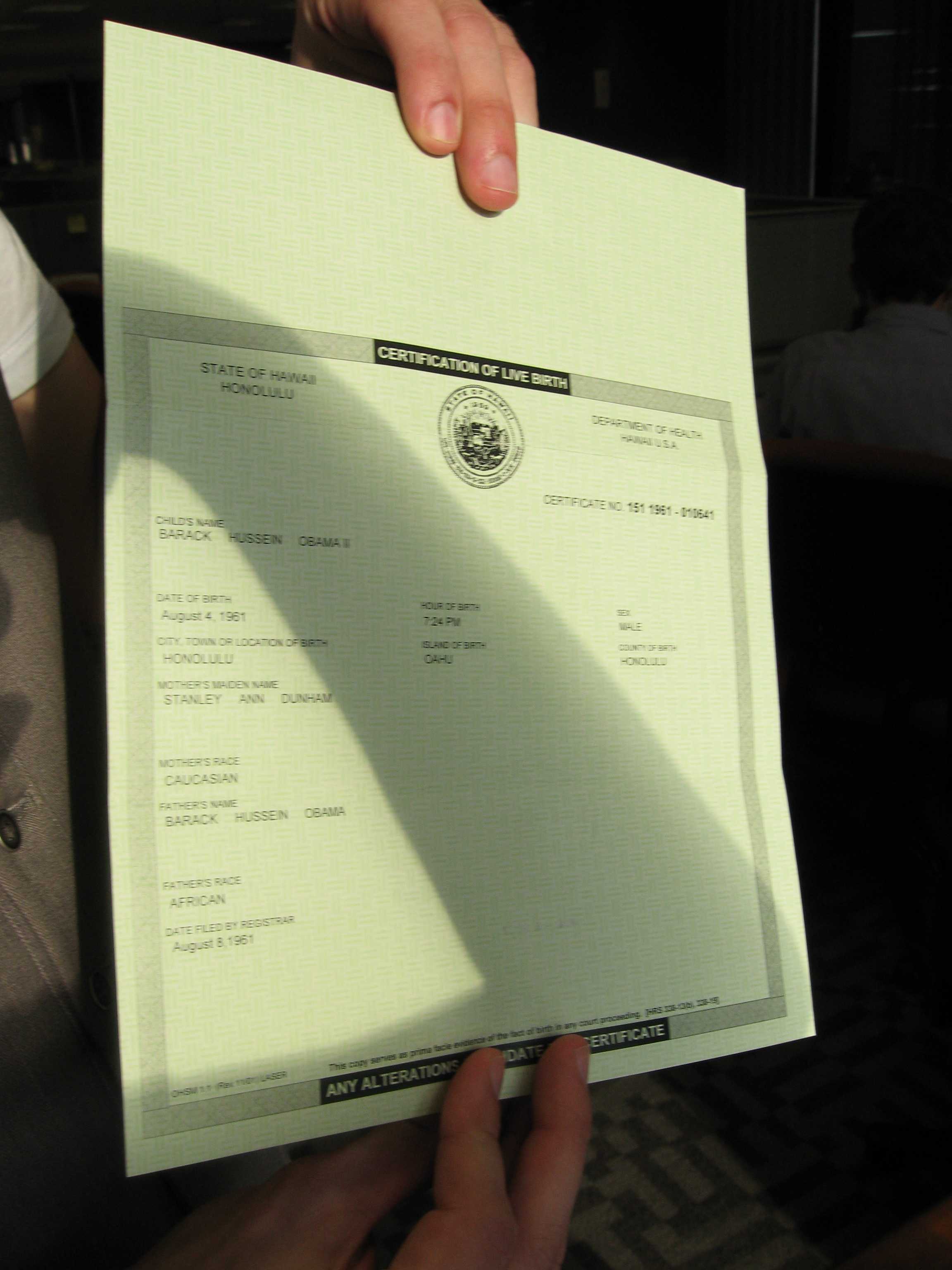
Obama is the President. There is nothing you nutty conspiracy theorists can do about it. Get over it. If you disagree with him and his policies, vote someone else in on November 4th, 2012. But until then, there isn't anything you can do whatsoever, especially by claiming this nonsensical craziness. The State of Hawaii says he's a citizen. There are hi-def pictures up all over the internet of the birth certificate (and for those nutjobs who still doubt, I have them posted below as well!)...


I believe this sums it up quite nicely.


“I, Dr. Chiyome Fukino, Director of the Hawai‛i State Department of Health, have seen the original vital
records maintained on file by the Hawai‘i State Department of Health verifying Barack Hussein Obama
was born in Hawai‘i and is a natural-born American citizen. I have nothing further to add to this statement
or my original statement issued in October 2008 over eight months ago.”


Additional links:
http://factcheck.org/2009/07/the-last-word-we-wish/
http://factcheck.org/2009/06/more-birther-nonsense-obamas-1981-pakistan-trip/
http://www.factcheck.org/elections-2008/born_in_the_usa.html